
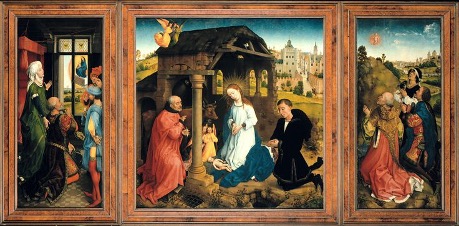
The depiction of Jesus from antiquity forward was integral to European art and culture. The life of Christ was an essential embodiment of Christian teaching. This presentation will draw attention to several important masterpiece of European art depicting Jesus Christ nativity. The depiction of Jesus has taken several centuries to establish. During Medieval time some common traits have been established that are now associated to Jesus Christ. This presentation will highlight different representation of Nativity from 14th to 16th century originating mostly from Italy but even from Netherlands. The tryptic above representing Nativity was painted by Dutch artist Roger van der Weyden during 15th century. We will also look at Swedish Medieval and Renaissance art and Saint Brigit representations in art.The transformation of paintings’ different styles from Medieval to Renaissance manner pointed out and the presentation will underline cultural changes in Europe during this fascinating period.
The mystical vision of the Nativity experienced by Bridget of Sweden is one of the most influential spiritual accounts of Christ’s birth within the Christian tradition. During a pilgrimage to the Church of the Nativity in Bethlehem, the saint received a vivid revelation of the moment when the Jesus Christ entered the world.
In her vision, Virgin Mary is portrayed kneeling in deep prayer and reverence, her hands raised toward Heaven in adoration of the newborn Child. The scene is simple and humble, yet filled with profound holiness. The infant Christ lies before her, radiating an indescribable light whose brilliance surpasses all earthly illumination. This divine light symbolizes the purity, holiness, and supernatural glory of the Incarnation.
St. Bridget recorded this vision in her spiritual work, the Revelations of St. Bridget, a collection of mystical revelations that deeply influenced Christian devotion during the late Middle Ages. Her description emphasizes not only the humility of the setting but also the overwhelming sense of divine presence surrounding the birth of the Savior.
The impact of this vision extended far beyond her writings. Artists throughout medieval and Renaissance Europe drew inspiration from Bridget’s account when depicting the Nativity. Prior to this, Mary was often shown reclining after childbirth; however, influenced by Bridget’s vision, many artworks began portraying her kneeling in adoration before the Christ Child. Likewise, painters frequently represented the infant Jesus as the source of radiant light illuminating the stable, reinforcing the idea that Christ is the true Light entering the world.
Through her mystical experience, St. Bridget helped shape the devotional imagination of generations of Christians. Her vision invites believers not merely to recall the Nativity as a historical event, but to contemplate it as a sacred mystery filled with wonder, humility, and divine glory.